As governments, NGOs and businesses prepared to make new commitments at the inaugural Global Summit for Eye Health (Nov. 2, 2026), Santen set out a contribution of up to five years to support the education pillar of WHO's SPECS 2030 initiative. Separately from this, the company's ambitions also encompass glaucoma care and greater patient involvement in research and decision-making.
RieNakajima, Santen's Chief Operating Officer, discusses the challenges of turning eye health policy into practical action – and what they hope will have changed by 2030.
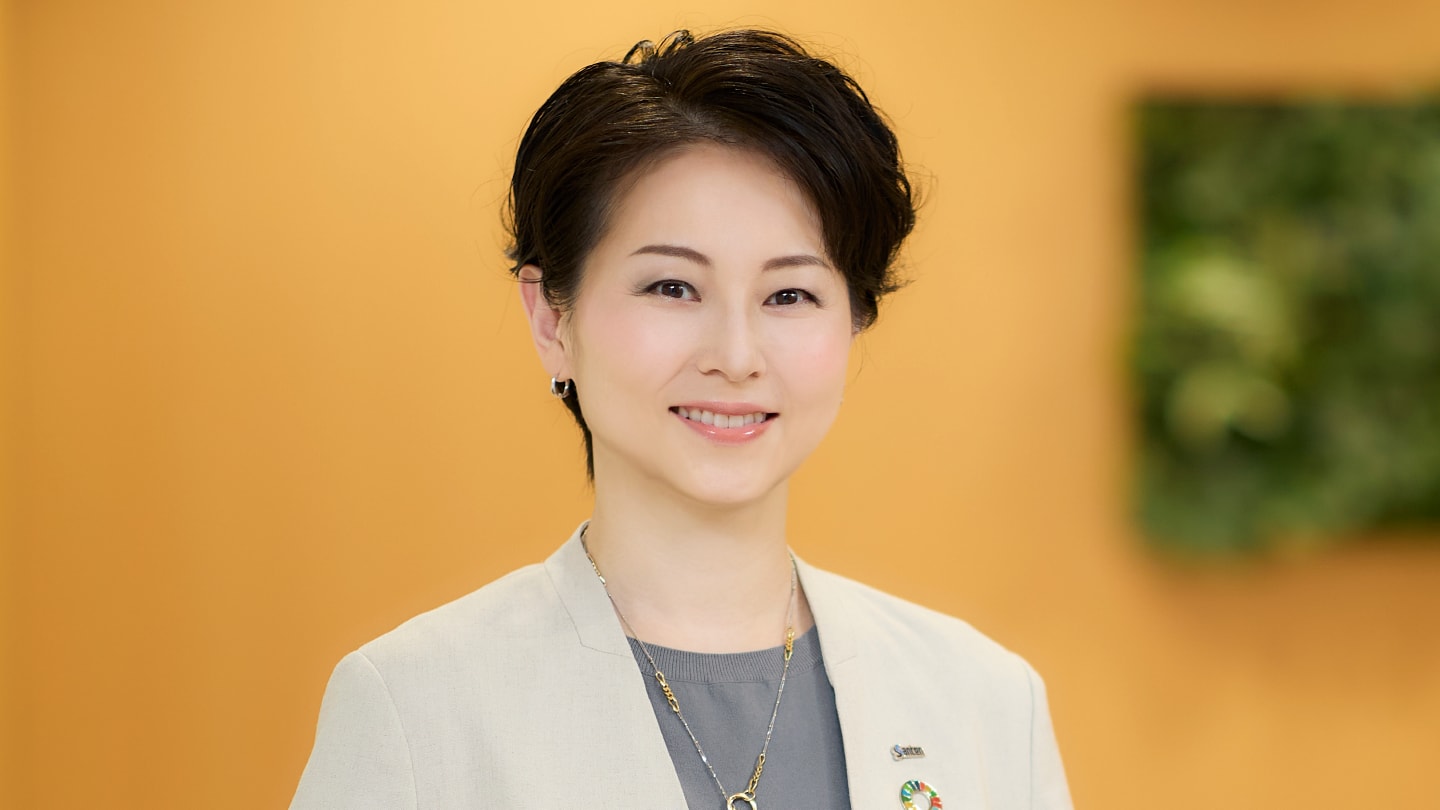
What prompted Santen's contribution to the education pillar of SPECS 2030 and the MyopiaEd program, and why now?
Rie Nakajima: Eye health should never be an afterthought. Even before joining Santen, I felt that it was an area that could easily be overlooked. Yet more than a billion people live with avoidable vision impairment, despite many forms of sight loss being preventable or treatable.
Santen has been dedicated to eye health for more than 136 years, and this commitment builds on that history. We want to advance eye health across the patient journey, from awareness and earlier intervention to better standards of care and more consistent patient involvement.
But we know we cannot do this alone. Improving eye health calls for coordinated action and strong partnerships. That is why we are making this commitment, and why we are so pleased to support the initiative. We have a responsibility to work with others if we want improvements to reach patients consistently.
What will the commitment support in practical terms, and how will you measure its impact?
Our commitment runs towards 2030. In myopia, we will support countries in translating policy and advocacy guidance into practical implementation, while encouraging shared learning among stakeholders.
We also want to embed patient perspectives more consistently in our work upstream – in research and development, evidence generation, and strategic decision-making.
Ultimately, these activities must have a real impact on patients. We will define key performance indicators for the areas in which we are working, so we can assess patient outcomes, policy development, and the decisions being made. This cannot remain just a concept; we need to see action. It is important to know not only what activities we undertake, but whether they influence outcomes for patients and the way decisions are made.
As part of this broader commitment, we are supporting the WHO Foundation partnership on myopia. The program includes updating the Myopia Ed library, then implementing and evaluating the program in selected countries, with progress looking at areas such as awareness and behaviors, integration of myopia prevention into national health and education plans, and evidence that can support broader uptake. WHO leads the program and its work with governments, including the selection of participating countries. Our role is to support the program through our partnership with the WHO Foundation.
We hope that working with governments and national health and education systems can help initiate systemic change. That is not something one company can achieve alone.
I also want to mention glaucoma, another area where Santen is committed to improvement. Towards 2030, we aim to support better glaucoma care through quality improvement and patient education in Europe and Asia.
In Europe, we want to establish measurable quality indicators that eye care professionals can follow. In Asia, our focus is on accessible educational and visual engagement tools for patients. We will also set indicators for these activities, including quality measures and patient education, to understand their impact.
In terms of myopia, where are the biggest gaps in awareness and education?
I see four areas where action is needed. The first is awareness and education. In many parts of the world, myopia is still not recognized or taken seriously enough as a condition requiring attention. Some parents do not know where to seek care or how to help slow progression when they discover that their child has myopia.
The second is translating scientific evidence into policy and practice. Many governments and other stakeholders are already doing important work, but we need a more coordinated effort to ensure that evidence on myopia prevention and control informs policies and is implemented in everyday practice.
Third, beyond the scope of this program, we need to strengthen the knowledge and capabilities of eye care professionals. As our understanding of myopia and how it can be managed continues to evolve, professionals need the right knowledge to identify it early, understand the available management options, and have informed conversations with children and their parents. They also need to explain lifestyle choices that may help slow progression.
Fourth, bringing patients' perspectives into research and development much earlier can make a real difference. We try to listen to patients, but too often their voices are heard only at the end. If we can understand their real needs and difficulties, and reflect those in the development of treatments and services, that would be a big step forward.
How can the program reach children and families, and what role might schools and digital tools play?
Rie Nakajima: School health programs are one possible way of reaching parents and children on the ground and will be explored with national stakeholders as the program is designed in each country.
Digital tools can also do more than provide education. One of the greatest challenges with current myopia treatments is keeping children and parents engaged so that they continue with their chosen treatment. I believe digital applications could play a significant role in supporting that engagement throughout the treatment journey. Awareness and education through digital tools is at the center of prevention. MyopiaED is a digital program that supports that, and it is why updating messages and libraries with the latest evidence on myopia prevention and control is crucial.
At Santen, we have also partnered with the European Myopia Society on their educational initiative, Myopia Explorers. It helps children understand myopia and how they can look after their eye health, including lifestyle choices such as spending more time outdoors and limiting screen time.
It is separate from our contribution to the SPECS 2030 initiative, but it provides an example of the kind of educational work that partnerships can make possible.
What would success look like after five years – both realistically and in your ideal scenario?
In the countries where the program is implemented, I would love to see the majority of parents, children, and policymakers recognize myopia as a serious condition and understand the importance of taking action early. They should know how to seek care and which lifestyle choices, such as spending more time outdoors, can help. If we achieve that level of awareness, I believe other improvements will follow.
I would also like to see policy frameworks and advocacy guidance translated into tangible activities. If stakeholders are taking action in those countries, rather than simply producing documents, that will be a meaningful achievement.
Other countries may then observe what is happening and learn from it, allowing the impact to extend beyond the initial countries. That would be my dream.
As COO of Santen, and beyond the prevention and awareness activities, my bigger ambition is to see new treatment choices developed with patients' voices informing the process. If, by 2030, patients have more options that reflect their needs, I would feel we had made a real difference.
Myopia is an important focus, but there are other pillars to our commitment, including glaucoma and patient centricity. The idea of involving patients earlier, through a patient council and in the development process, is particularly important.
There is growing momentum around eye health, reflected in the first Global Summit for Eye Health. More people are recognizing that vision matters not just to individual lives and wellbeing, but also to society and the economy. We are pleased to contribute to that wider effort through partnership.
Jessica Thompson, Deputy CEO, International Agency for the Prevention of Blindness (IAPB), on why the Global Summit for Eye Health is an important moment for the sector
Jessica Thompson: The Global Summit for Eye Health is the first time heads of government, ministers, development partners, and sector leaders have come together with a shared focus on eye health as a development and economic priority. Hosted by Antigua and Barbuda on November 2, the Summit aimed to convert growing political attention into concrete commitments that expand access to eye care and accelerate progress toward ending avoidable sight loss, which affects more than one billion people worldwide.
What case are you making to governments and decision-makers?
The evidence is clear that investing in eye health delivers benefits far beyond healthcare. Through IAPB’s Value of Vision work, we have shown that improving eye health can generate significant returns through greater productivity, stronger educational outcomes, and increased social inclusion. Addressing uncorrected vision impairment could add hundreds of billions of dollars to the global economy each year, while helping more people learn, work, and participate fully in society.
What would success look like coming out of the Summit?
Success means securing meaningful commitments that strengthen eye care services, integrate eye health across government policies, and mobilize the resources needed to reach more people. Just as importantly, the Summit provides an opportunity to strengthen collaboration across the eye health sector. We know what works to prevent blindness and restore sight; the challenge now is scaling proven solutions so everyone, everywhere can access the eye care they need.
