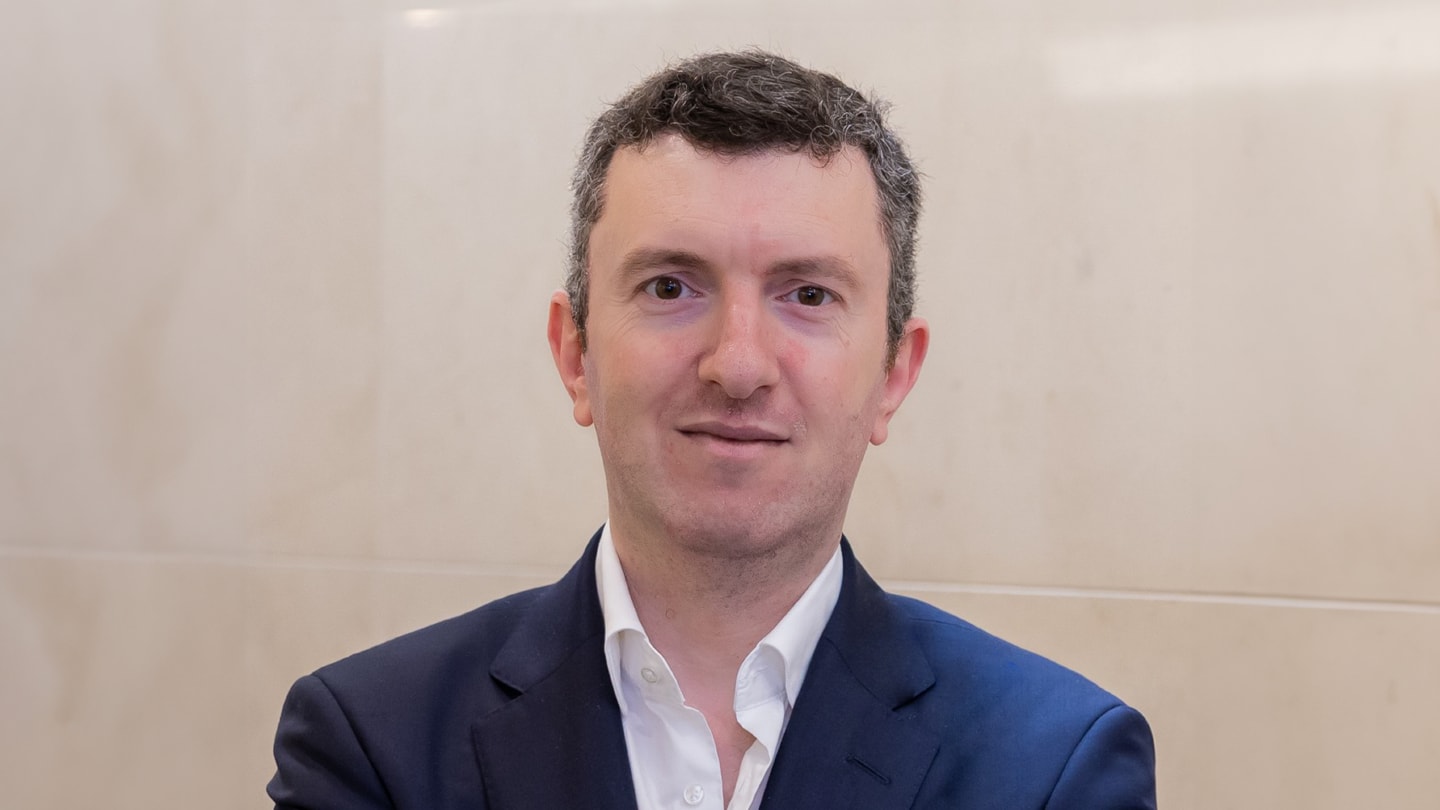
Fresh from one of the largest and most successful European Glaucoma Society (EGS) Congresses to date, outgoing president Professor Ingeborg Stalmans and incoming president Professor Luis Abegão Pinto reflect on the society's next chapter. Speaking with The Ophthalmologist following the 2026 meeting in Brussels (May 30-June 2), they discuss how EGS is balancing innovation with tradition, embracing emerging technologies such as artificial intelligence and remote monitoring, and ensuring that future advances in glaucoma care remain grounded in scientific rigor, education, and the needs of patients.

As the EGS moves from one presidency to the next, what are you most proud of, and what are your top priorities going forward?
Brussels was one of the largest and most successful EGS meetings we have ever had, and we think what we are most proud of is that the society has become a place where different parts of the glaucoma community come together. Whether you are a general ophthalmologist, a glaucoma surgeon, a researcher, or someone working on artificial intelligence, there is something relevant for you within EGS.
Over the past two years, we have remained true to the four pillars that guide the society: innovation, communication, implementation, and education. The publication of the 6th Edition of the EGS Guidelines, together with the new guides on filtering surgery and the manual on laser surgery, are examples of that commitment.
Looking ahead, our priority is to continue building on those foundations and ensuring that EGS remains scientifically rigorous, educationally relevant, and open to new ideas while keeping patients at the center of everything we do.
AI featured throughout the EGS 2026 program. Why has the society put such a strong focus on artificial intelligence this year, and what do you hope delegates will take away from those discussions?
AI is already part of our daily lives, often without us even noticing it. In medicine, and particularly in ophthalmology, we are seeing the same mixture of excitement, fascination, and concern. There is enormous potential, but there are also legitimate questions about limitations, validation, and implementation.
Our goal was not to promote AI uncritically, not to resist it simply because it is new. Instead, we wanted to create a forum where clinicians, researchers, and industry could discuss both the opportunities and the pitfalls. AI is a tool, and like any tool, its value depends on how it is used. We hope delegates left Brussels with a clearer understanding of where AI can already help us today, where caution is still needed, and what questions remain unanswered.
Several sessions looked at telemedicine, home monitoring, and digital care. How do you see these technologies changing the way glaucoma services are delivered across Europe?
Glaucoma care faces a growing challenge: increasing numbers of patients, limited resources, and significant differences between healthcare systems across Europe. And despite our best efforts, still more than half of the patients with glaucoma remain undiagnosed, which is likely the greatest challenge of all.
Digital technologies offer an opportunity to rethink how care is delivered and how expertise can reach more patients. At the same time, EGS represents nearly forty countries, each with very different realities. What works in one healthcare system may not be feasible in another. That is why these discussions are so important. Telemedicine, home monitoring, and digital pathways are not about replacing clinicians; they are about helping us use expertise more efficiently and bringing care closer to patients, in a setting closer to home.
The challenge will be implementing these technologies in a way that maintains quality while improving access.
The program included debates about the future of trabeculectomy and glaucoma surgical training. Is there a risk that essential surgical skills could be lost as newer procedures become more popular?
That is a legitimate concern whenever a new technology enters clinical practice. As newer procedures gain popularity, it is natural to ask whether we are dedicating enough time and attention to techniques that have traditionally been considered the gold standard.
The key point is that innovation and tradition should not be viewed as opponents. Trabeculectomy remains one of the most effective procedures we have for lowering intraocular pressure and must remain a core part of glaucoma training. At the same time, new procedures are expanding our options and generating promising results.
At EGS, we actively support trabeculectomy training through dedicated dry labs at the Residents' Course and Congress, surgical education resources, and collaborations with our educational partners. The strong demand for these activities – with hands-on trabeculectomy courses consistently among the first to sell out – shows that interest in mastering these essential skills remains high.
Imaging was one of the major themes of the 2026 Congress. What developments in imaging are you most excited about, and how close are they to changing routine clinical practice?
This was the first year that we introduced a dedicated Imaging Day within the EGS Congress, and we believe that decision was very successful. Imaging has always been central to glaucoma, but creating a specific space for it allowed us to explore the topic in much greater depth and helped bring attention to an area that continues to evolve rapidly.
Ophthalmology is fortunate in that almost every relevant structure can now be imaged, from the anterior chamber angle to the optic nerve and retina. What excites us most is not necessarily a single device, but the increasing ability to integrate information from different imaging modalities and extract clinically meaningful data. We are seeing developments in OCT, angle imaging, and AI-assisted fundus photo interpretation that are already beginning to influence daily practice. The challenge now is not whether these technologies work, but how to implement them in a way that is useful, accessible, and evidence-based across very different healthcare settings.
The program included dedicated sessions on patient-reported outcomes and the patient perspective. How is the EGS helping to ensure that glaucoma care is measured by what matters to patients, not just clinicians?
One of the most important developments within EGS has been the growth of our collaboration with patient organizations through the Experts by Experience initiative. We firmly believe that patients are not simply recipients of care; they are key stakeholders whose voices need to be heard when we discuss the future of glaucoma management.
At the same time, integrating patient perspectives into research and clinical practice is not always straightforward. We increasingly recognize that outcomes reported by patients are important and should influence decision-making, but translating those experiences into robust and measurable endpoints remains challenging. We understand that this is the direction in which the field needs to move, and EGS is committed to fostering those discussions and helping develop meaningful ways to measure what truly matters to patients.
The final plenary looked ahead to the future of glaucoma care and the next EGS Congress in Berlin. By the time delegates meet again, what progress would you most like to see in the field?
By the time we meet again in Berlin, we would like to see greater maturity in several of the developments that are currently generating so much interest. Artificial intelligence is one example. We hope that, by then, we will have gained more experience in understanding where it genuinely adds value and how it can be integrated safely and effectively into clinical pathways.
We would also like to see further progress in imaging, surgical innovation, and new therapeutic approaches. At the same time, there are areas of glaucoma that have changed relatively little over the past decades, such as functional assessment and perimetry, where meaningful advances would be particularly welcome. Ultimately, our hope is not for a single breakthrough, but for steady progress across multiple areas that improves patient care and helps us make better decisions.
What do you think will be the biggest change in glaucoma care over the next five years?
The biggest changes may not come from a new drug, a new imaging device, or even a new surgical technique. They may come from changes in how we organize care. As technologies such as artificial intelligence, telemedicine, and remote monitoring become more integrated into clinical practice, the entire patient pathway may begin to evolve.
Today, we still tend to think of glaucoma care as a process that depends on direct interactions between patients and clinicians at every step. In the future, risk stratification, monitoring, and decision support may increasingly happen in different ways. Whether that transformation occurs within five years or takes longer remains to be seen. To use an analogy, if someone had described a car to people whose lives revolved around horses, they might have understood the technology but not the profound impact it would have on society. We may be approaching a similar moment in glaucoma care, where the most important changes are not technological advances themselves, but the new ways they allow us to deliver care.
