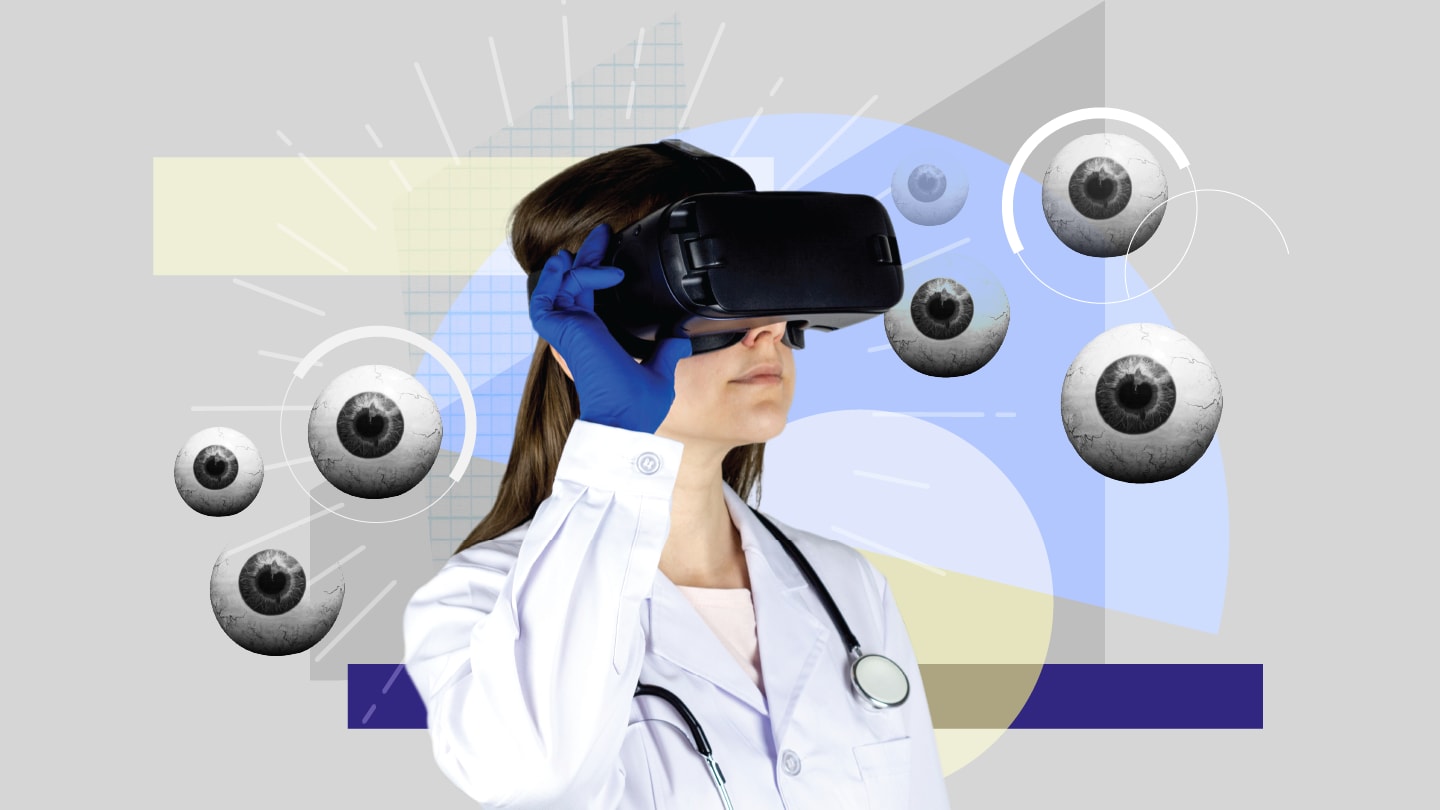
Virtual reality simulations that allow parents to “see” through the eyes of their visually impaired child may significantly improve empathy, understanding, and advocacy, according to a new qualitative study published in Eye.
Researchers from Queen’s University Belfast and Angel Eyes NI, Belfast, UK, explored how immersive point-of-view (PoV) virtual reality (VR) experiences affected parents’ and carers’ perceptions of their child’s visual impairment (VI). Using a bespoke VR platform called Empatheyes, participants experienced simulated visual environments tailored to their child’s specific condition – including reduced acuity, contrast loss, photophobia, tunnel vision, and color vision defects.
The study involved in-depth interviews with ten parents and carers of children with a range of visual impairments, including nystagmus, cerebral visual impairment, optic nerve hypoplasia, and Bardet–Biedl syndrome. The simulations were customized using clinical information and adjusted in real time by trained facilitators.
Four major themes emerged from the analysis: enhanced understanding, emotional impact, reflections on the child’s future, and increased empowerment and advocacy.
For many participants, the VR experience transformed abstract ophthalmic terminology into something tangible and emotionally resonant. As one parent described, “It all makes sense now”, with this newfound vantage point helping her to better understand past difficulties her child had faced.
Another participant reported that scenarios from daily life suddenly became clearer after seeing the simulated visual world. And another parent, expressing how much the VR experience had impacted their understanding of their child’s condition, said: “It really gives you an insight into what your child is dealing with and what they can see. Until you can see that you honestly don’t know.”
The VR system was able to layer multiple impairments simultaneously, such as contrast loss, photophobia, and peripheral field restriction, to recreate realistic visual challenges of conditions faced by the children.
The emotional impact of this VR experience was substantial. Parents described feelings ranging from empathy and relief to sadness and guilt – particularly among those whose child’s diagnosis had been delayed. Despite this, participants overwhelmingly viewed the experience positively and felt it strengthened their ability to support their child.
Importantly, the immersive simulations also altered how parents viewed educational and social environments. Many reported becoming more proactive advocates for classroom accommodations and accessibility after experiencing the visual barriers firsthand. As detailed in the study, participants felt better equipped to communicate their child’s needs to teachers and special educational needs coordinators.
The researchers argue that VR may help bridge a longstanding communication gap in pediatric ophthalmology. Clinical measures such as visual acuity can be difficult for families to interpret in practical terms, whereas immersive simulation provides a more embodied understanding of how visual impairment actually affects the day-to-day life of their child.
The technology itself represents an evolution beyond traditional low-vision simulation spectacles. Unlike static goggles, the VR platform incorporates eye tracking and adjustable filters that allow different severities and combinations of impairments to be replicated dynamically, allowing the technology to accurately demonstrate conditions including field loss, achromatopsia, reduced acuity, and photosensitivity.
While the study was small and exploratory, the findings highlight growing interest in VR as both an educational and empathic tool within ophthalmology. Previous research has examined VR for surgical training and practitioner empathy, but evidence around family-centered applications has been limited.
As immersive technologies continue to evolve, the study points toward a future where ophthalmic care may involve not only explaining vision loss – but enabling others to directly experience it themselves.