Refractive and cataract surgeon, Ralph Chu, is the Founder and Medical Director of Chu Vision Institute and Chu Surgery Center in Minneapolis, Minnesota, USA. From the floor of AAO 2022 in Chicago, Illinois, US, he talks about his experience with Carl Zeiss’ QUATERA 700 phacoemulsification platform. Chu, who has been practicing for 26 years, specializes in all forms of refractive and cataract surgery, implanting premium IOLs, and any refractive surgery procedures available.
Speaking of the QUATERA 700, Chu comments that he felt very fortunate to travel to Germany in 2017 and work with Carl Zeiss’ engineers designing the new phacoemulsification unit. He saw the QUATERA system before it acquired its name, when it was “just a bunch of wires and tubes sitting on a laboratory shelf.”
Chu was able to use QUATERA 700 in test eyes, and experience how the new features such as the Quattro pump would help surgeons. For Chu, one of the most amazing moments was to be the third team in the US to have access to the QUATERA 700, and to see it go from the laboratory into clinical practice was a very exciting process.
All about the fluidics
As Chu comments, one of the key features of QUATERA 700 allows surgeons to use very low intraocular pressure settings with a very high flow and still maintain a stable anterior chamber. His team tested those parameters and was able to get really efficient surgical results with good day-one postoperative outcomes that – in Chu’s experience – no other phacoemulsification system has been able to replicate. In Chu’s words, QUATERA 700 represents a whole new way of managing fluidics and removing cataracts, with the pump – that is not peristaltic or venturi – bringing the revolutionary aspect. It allows for infusing fluid at the same time and rate as vacuuming fluid from the anterior chamber. This eliminates post-occlusion surge and allows surgery to be done more efficiently. As surgeons have to always be aware of how stable the anterior chamber is, this system gives them peace of mind and allows them to treat patients with varying pupil sizes and different densities of nuclei.
Chu has observed that patients for whom his team used the QUATERA 700 report better visual results and higher satisfaction, and their intraocular pressure can be maintained at a very comfortable level during the surgery. With less fluid flowing inside the eye, patients recover quicker.
Digitally integrated workflows
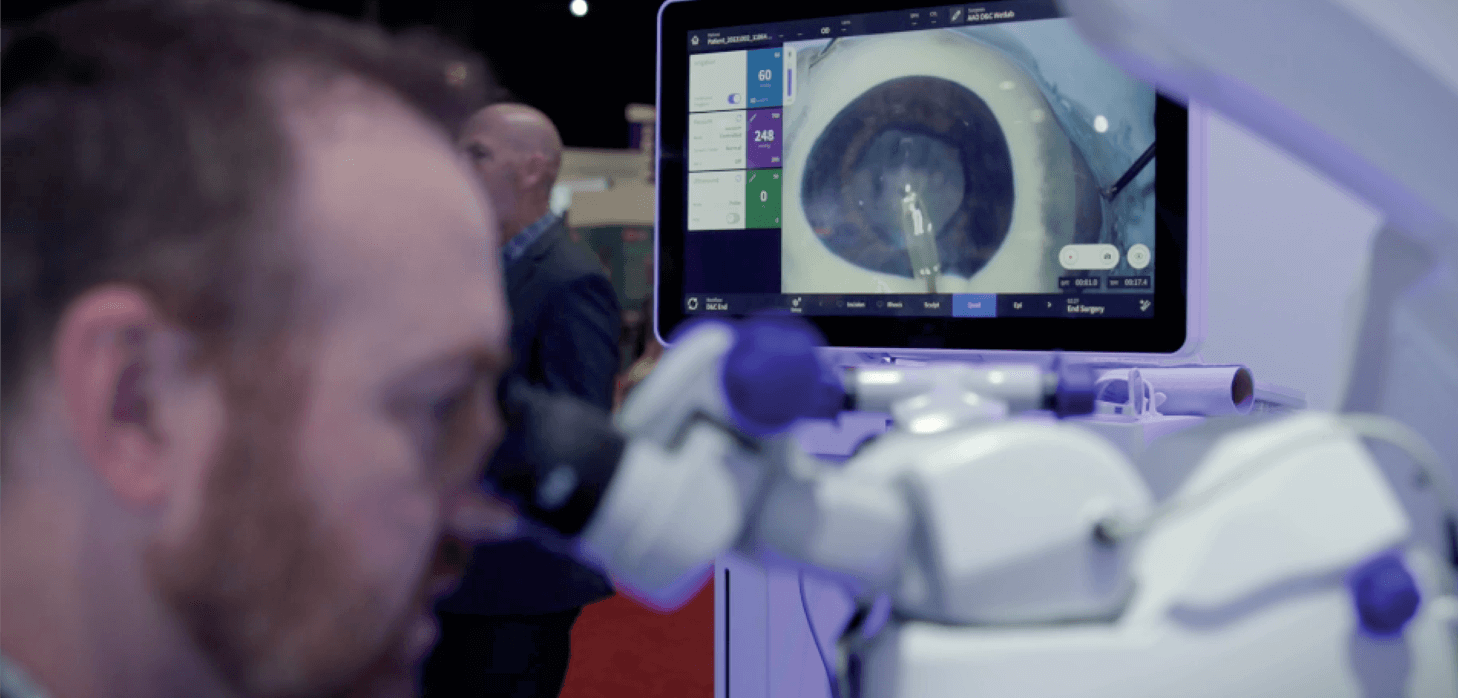
For Chu, the future of cataract surgery – and surgery in general – will rely on device integration, with information from the clinic being available inside the operating room in real time. This should allow surgeons to alter the settings as they evolve cataract surgery to be the most efficient in terms of fluidics and energy use – to ultimately improve outcomes.
Digital workflow integration will allow surgeons to educate themselves and others by comparing their surgeries with those of their colleagues or trainees in real time, side by side. As Chu observes, this is crucial for learning and improving surgical outcomes. Chu appreciates that QUATERA 700 works great for less experienced surgeons as the power-on-demand function allows phacoemulsification energy only to be delivered when there’s occlusion. This may result in the surgery taking a bit more time, but it is more controlled and safer.
For Chu’s team, the learning curve for QUATERA 700 involved around three cases. He comments that integrating a new device can be quite stressful for the surgical team, but they found working with QUATERA 700 straightforward and efficient. The QUATERA 700’s large digital displays make it easier for the whole surgical team to see what is happening, and the heads-up display and three-dimensional imaging are very useful exciting for the surgeon. The whole team feels involved in the procedure.
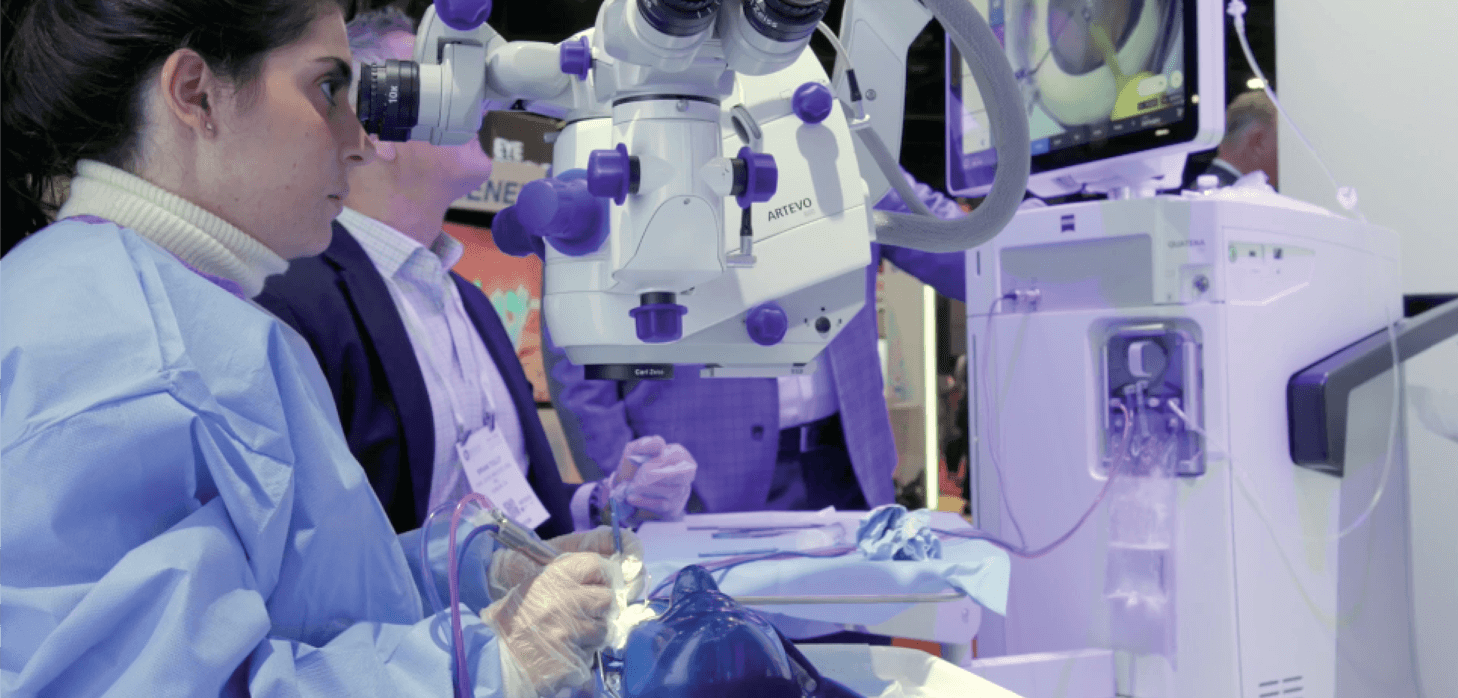
Chu comments that correcting astigmatism and maximizing visual outcomes is more important than ever, so being able to get information from the IOL Master 700 in the clinic and digitally align it with the Calisto system in real time has increased precision in delivering patients’ desired outcomes. According to Chu, having a cataract removal system that minimizes corneal edema and improves efficiency at the same time is really moving the field of cataract surgery forward.
Chu’s team noticed difficulty with removing very small strands of cortex at the end of cataract surgery, important for good visual outcomes after implanting premium IOLs or light adjustable lenses. He has found that with a pump like the QUATERA 700 he can get excellent cortical clean-up in the capsular bag, which has delivered less posterior capsule opacification and better visual outcomes with premium technologies.
Chu had found that he was maxing out the capabilities of his current device, but by learning QUATERA 700 he was able to jump to the next level in terms of efficiency and outcomes improvement. He notes that QUATERA 700 has been designed to be very versatile, used in a way the surgeon is comfortable with, transitioning easily from the currently used device.